Gardening as a game of balance: why diversity matters, what our pollinators are up against, and how to create a green oasis we share with everything else that lives there.
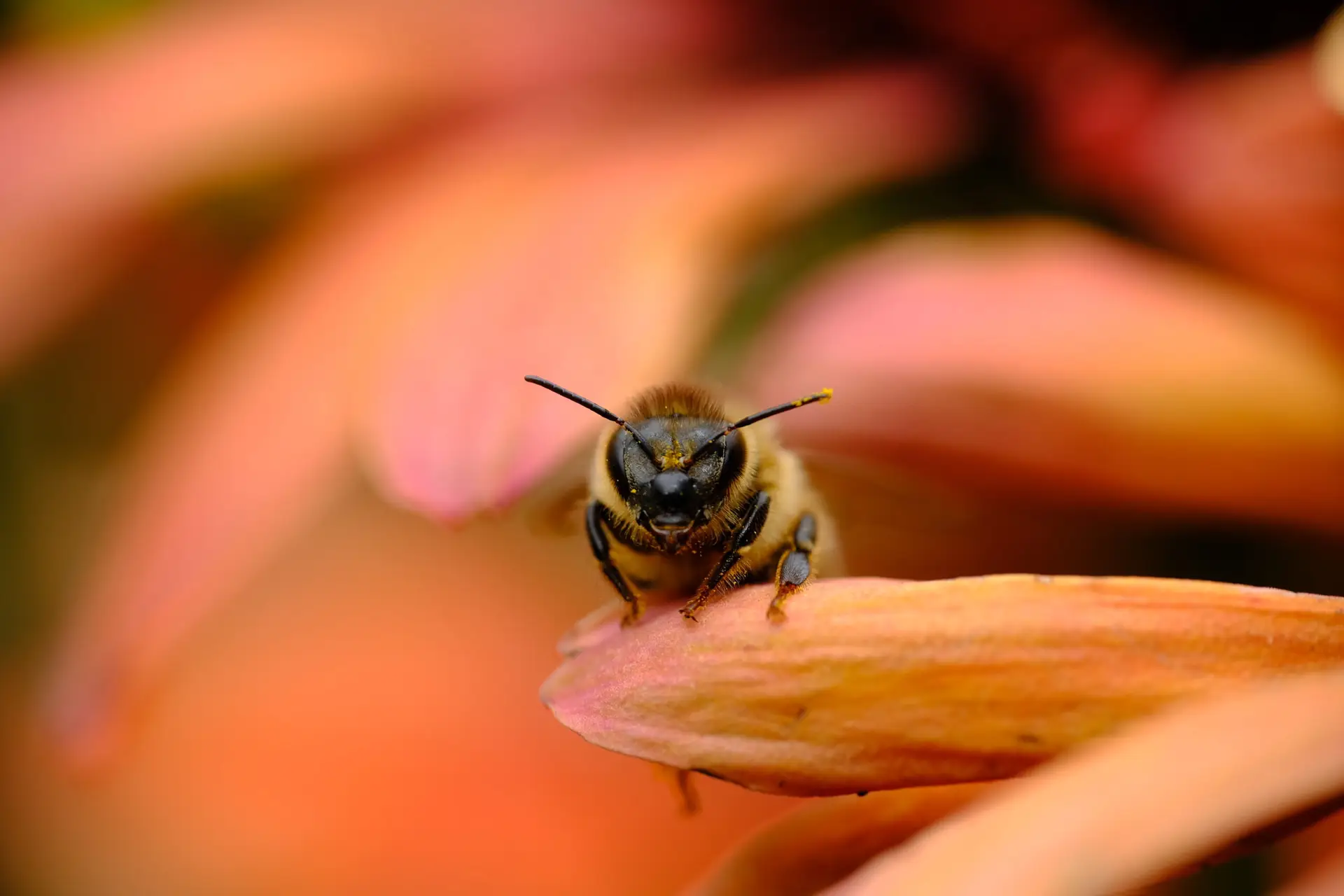
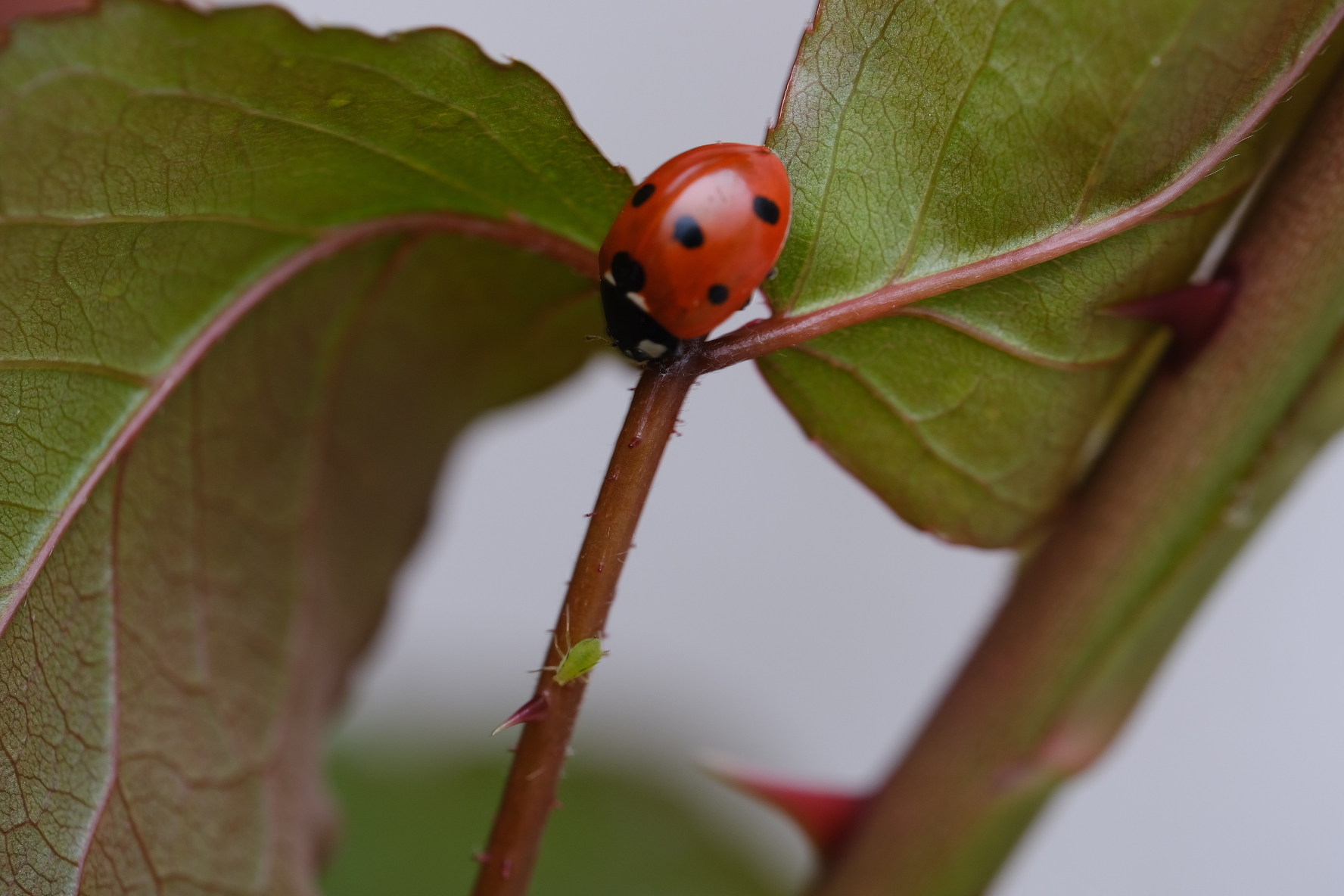
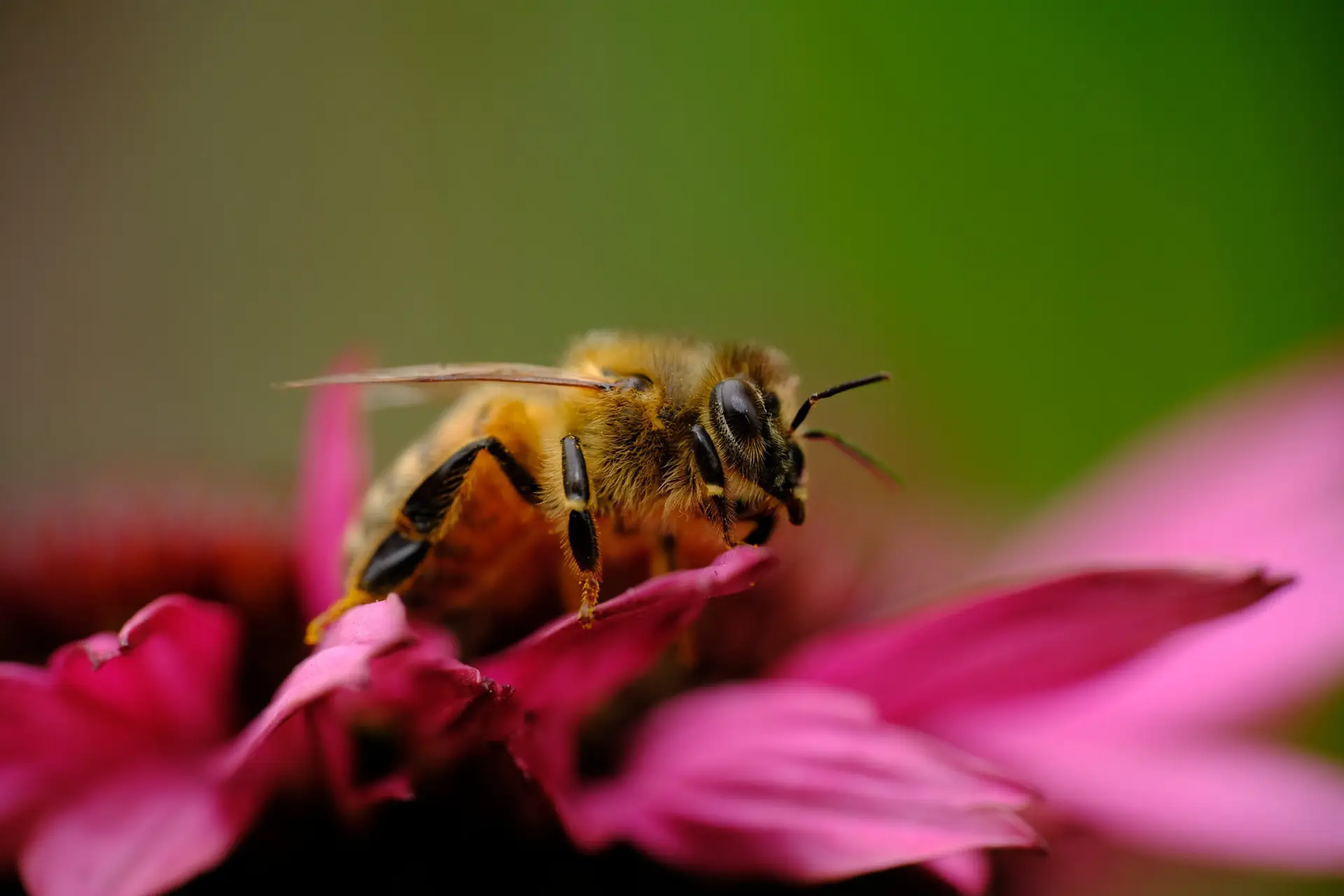
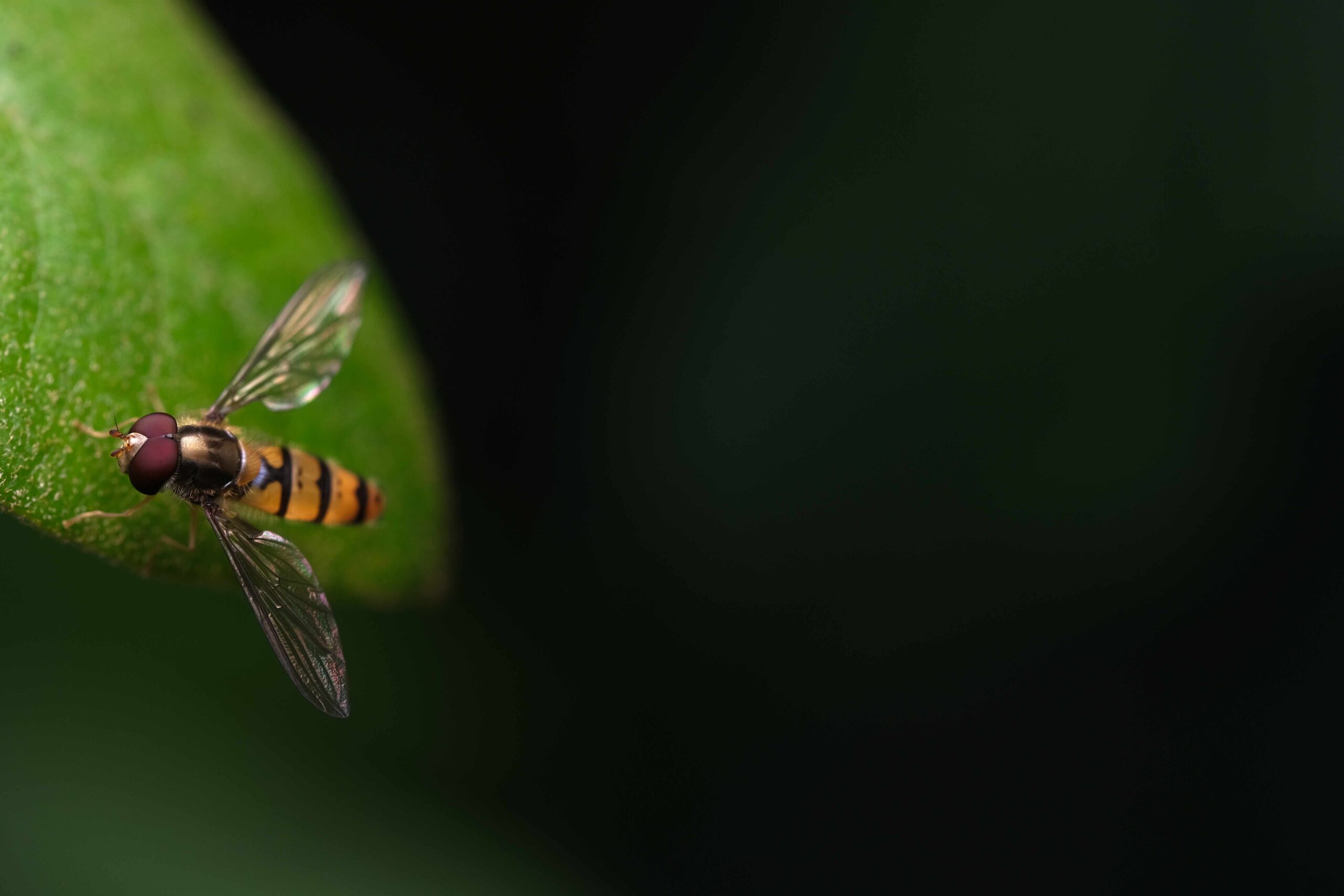
Get down to the level of a flower, as close as a macro lens allows, and a garden stops being a view. A honeybee works its way across a coneflower. A hoverfly rests on a leaf, wings catching the light. A ladybird patrols a rose stem a few millimetres from an aphid. Each of them is busy with its own life, and none of them is there for us.
That shift in perspective is what I would like to share with you here. Too often a garden is treated as an outdoor room: tidy, controlled, sprayed and swept, and in ecological terms almost sterile. It can be so much more. A garden can be a living ecosystem, a small but real part of the natural world, and we are only one of its inhabitants.
1. A garden is not a room, it is an ecosystem
An ecosystem is a web of relationships. Plants capture sunlight and feed insects; insects pollinate flowers and feed birds, hedgehogs and bats; fungi and soil life break down fallen leaves and return nutrients to the roots. Remove one thread and others loosen. Add threads, and the whole web becomes stronger.
Every garden, whatever its size, is part of this web. And together our gardens add up to something significant. A national study estimated that around 22.7 million households in the UK have a garden, covering roughly 433,000 hectares, with nearly 29 million trees and several million ponds between them. No nature reserve could ever match that reach. What we plant, and what we choose not to spray, matters far beyond our own fences.
2. A game of balance
I like to think of the garden as a game, and the aim of the game is balance rather than control.
Take aphids. Most gardeners see them as a problem to eliminate. But aphids are also food. A single seven-spot ladybird can eat around 5,000 aphids during its life. Hoverfly larvae feed on them too, and a family of blue tits raising chicks in spring needs an astonishing number of caterpillars every single day. Spray the aphids away and you also starve the ladybirds, the hoverflies and the birds that would have kept them in check. Leave a little room for the “pests”, and the predators arrive.
This is the game: every player has a role, and no single player should win outright. When something gets out of balance, the answer is usually not a bottle of chemicals but another piece in the game: more diverse planting, a place to shelter, a source of water, a little patience.
3. The richer, the stronger: why diversity matters
In nature, diversity is resilience. A garden with one lawn and three shrubs offers food and shelter to very few species. A garden with many layers, from trees and shrubs to perennials, grasses, climbers, ground cover, a patch of bare soil and a log pile, offers homes and food to hundreds.
The Royal Horticultural Society’s long-running Plants for Bugs research found that the best way to support garden invertebrates is to plant mainly native plants, to keep the vegetation dense, and to leave a few patches of bare soil, while near-native and exotic plants still play a valuable role, extending the flowering season and providing winter cover. Their simplest conclusion is also the most encouraging: any planting is better than none, and the more densely a garden is planted, the more life it supports.
4. Flowers for every season
Diversity is not only about how many plants you grow, but about when they flower. Our pollinators need food from late winter until late autumn, and the gaps are often where they struggle most.
- Late winter and early spring: the first bumblebee queens emerge hungry, when very little is in flower. Hellebores, pulmonaria, willows, crocus, single-flowered cherries and winter-flowering honeysuckle can make the difference.
- Summer: the season of abundance. Lavender, single-flowered roses, honeysuckle, salvias, and even clover and dandelions left to flower in the lawn.
- Late summer and autumn: open, daisy-like flowers such as echinacea, asters and sedum, and above all ivy, one of the most important late sources of nectar and pollen.
- Winter: a few species stay active on milder days. Mahonia, sarcococca and the strawberry tree provide welcome energy.
When I design a planting scheme, I think of it as a calendar as much as a picture. Something should always be flowering, and something should always be offering shelter: seed heads, hollow stems and evergreen cover through the winter, where ladybirds and many other insects hibernate.
5. What our pollinators are up against
The UK has more than 270 species of bee, including 24 species of bumblebee, a single honeybee and more than 250 solitary bees, alongside hoverflies, butterflies, moths, beetles and many other pollinators. Together they pollinate a large share of our crops and wild flowers. And they are in trouble.
The State of Nature 2023 report found that around one in six species in Great Britain is now at risk of extinction, and that the average abundance of land and freshwater species in England has fallen by about a third since 1970. The Bugs Matter citizen-science survey, which counts insect splats on car number plates, recorded a 78% fall across the UK between 2004 and 2023, and 83% in England. Monitoring by the UK Pollinator Monitoring Scheme suggests that Britain has lost around a third of its hoverflies in just eight years.
The causes are well understood: the loss and fragmentation of habitat as meadows, hedgerows and wild corners disappear under farmland, roads and buildings; pesticide use; pollution; and climate change. More than 97% of the UK’s wildflower meadows have been lost since the 1930s. In our cities, paved front gardens, artificial lawns, sealed fences and over-tidy borders remove the small stepping stones that insects need to move, feed and breed.
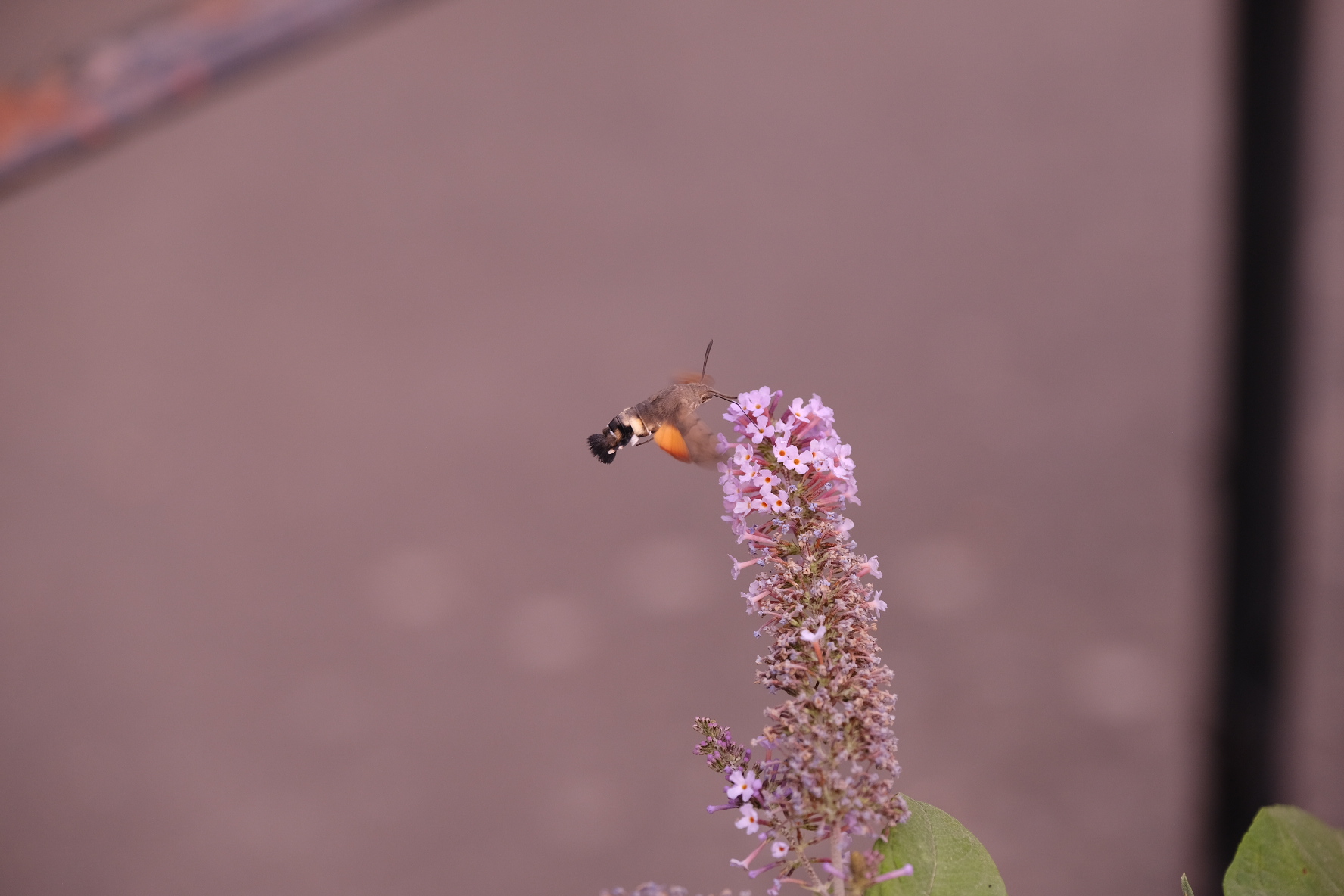
Climate change is also reshaping who visits our gardens. The hummingbird hawk-moth, a migrant from southern Europe and North Africa that hovers at buddleja and honeysuckle with its long proboscis, has been seen in the UK in sharply increasing numbers, part of a wider shift as species respond to a warming climate.
6. Cities can be part of the answer
Urbanisation is one of the pressures, but towns and cities can also become refuges. A large study of four British cities, published in Nature Ecology & Evolution in 2019, found that residential gardens and allotments were the pollinator hotspots of the urban landscape: gardens because of their sheer combined area, allotments because of their remarkable diversity. In other words, the most important places for urban pollinators are not distant reserves but the plots we look after ourselves.
7. Creating your own green oasis
Coexisting with the life around us does not mean letting a garden go wild. It means designing with nature rather than against it. A few principles I follow in every garden I design:
- Plant in layers and plant densely, from canopy to ground cover, leaving as little bare paving as you can.
- Plan for flowers in every season, mixing mainly native plants with well-chosen non-natives that extend the season.
- Choose single, open flowers over heavily doubled varieties, which often offer little pollen or nectar.
- Leave some things standing: seed heads, hollow stems and fallen leaves in a corner are winter homes.
- Tolerate a few aphids and let the predators do their work. Avoid pesticides altogether.
- Add water, even a small container pond or a dish of water with stones.
- Leave patches of bare soil for ground-nesting solitary bees, and a log pile for beetles and fungi.
- Keep the garden connected, with a small gap under the fence so hedgehogs can travel between gardens.
8. A smaller part of something larger
Perhaps the most important change is not in the garden at all, but in how we see ourselves within it. We are not the owners of an ecosystem; we are one of its members. The bees, the beetles, the fungi and the soil were here long before us, and they will be here long after us. Our role is not to dominate, but to take our place in the balance, to give back a little of the space we have taken, and to enjoy the extraordinary life that returns when we do.
Get close. Look at the life in a single flower. Once you have seen it, it is very hard to see a garden as just a room outside the house again.
If you would like to create a garden that is beautiful for you and generous to nature, I would love to hear about your space.
Sources and further reading
- State of Nature Partnership (2023). State of Nature 2023; England summary.
- Buglife / Kent Wildlife Trust (2024). Bugs Matter citizen-science survey.
- RHS / UK Pollinator Monitoring Scheme. Help hoverflies: new data reveals dramatic declines.
- Royal Horticultural Society. Plants for Bugs and Grow a year-round bee buffet.
- Baldock, K. et al. (2019). A systems approach reveals urban pollinator hotspots and conservation opportunities. Nature Ecology & Evolution 3, 363–373.
- Davies, Z.G. et al. (2009). A national scale inventory of resource provision for biodiversity within domestic gardens. Biological Conservation 142, 761–771.
- Bumblebee Conservation Trust. Different types of bee.
- Woodland Trust. 7-spot ladybird.
- Butterfly Conservation. Did you spot the moth that looks like a hummingbird?
- Scottish Wildlife Trust. Blue tit chicks and caterpillars.
- The Ecologist. Meadows offer food and shelter to vast varieties of animals and wildflowers.
All photographs in this article © Lionel Ely-Marius.